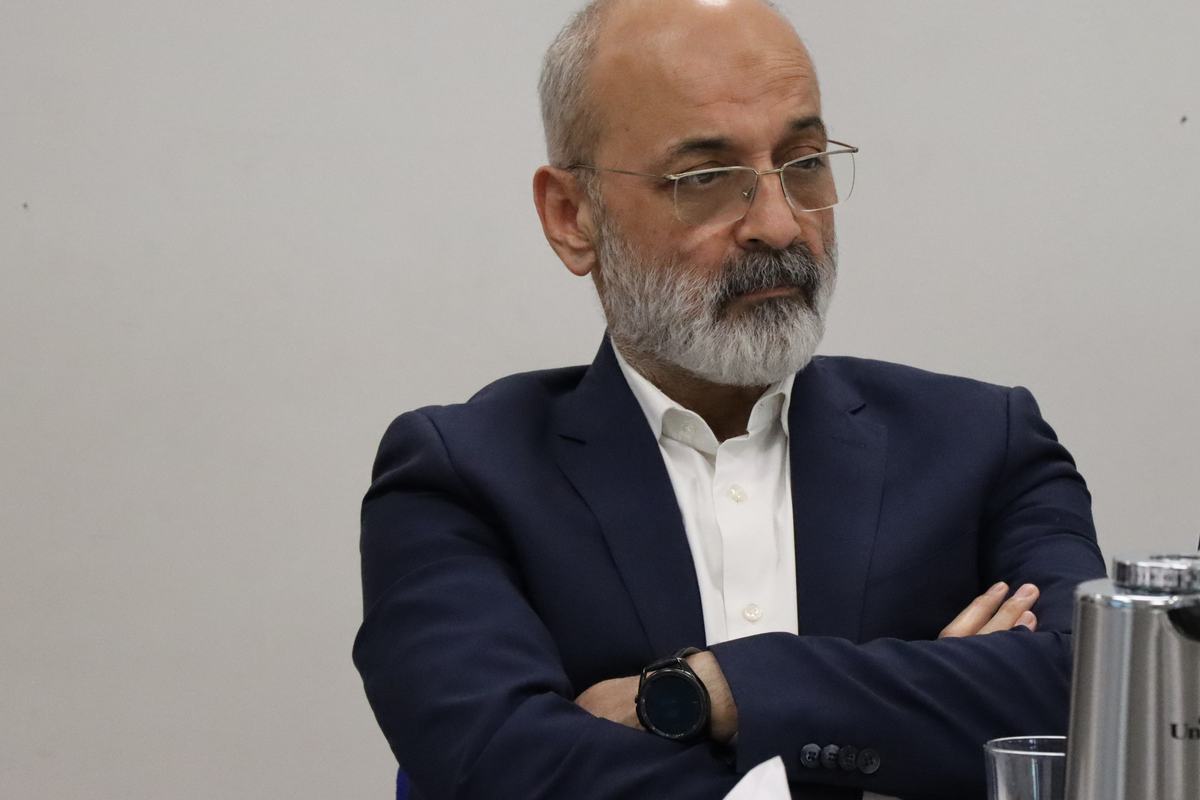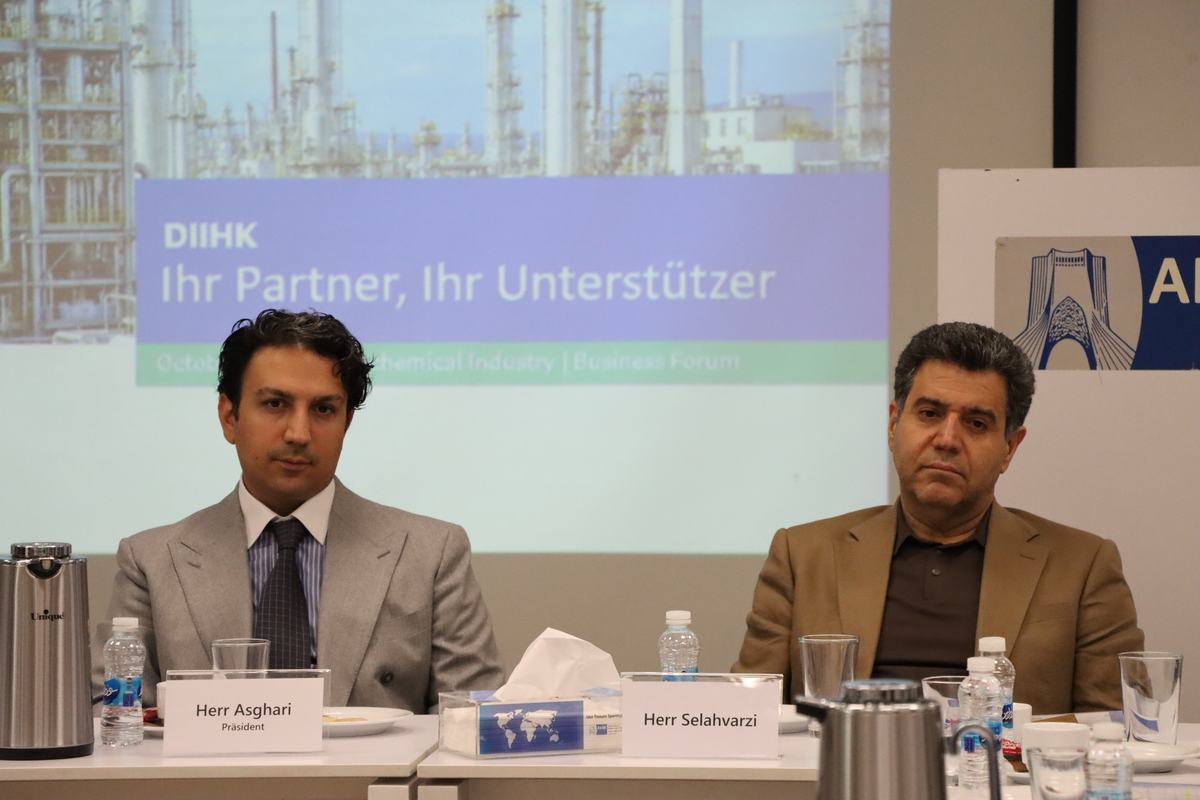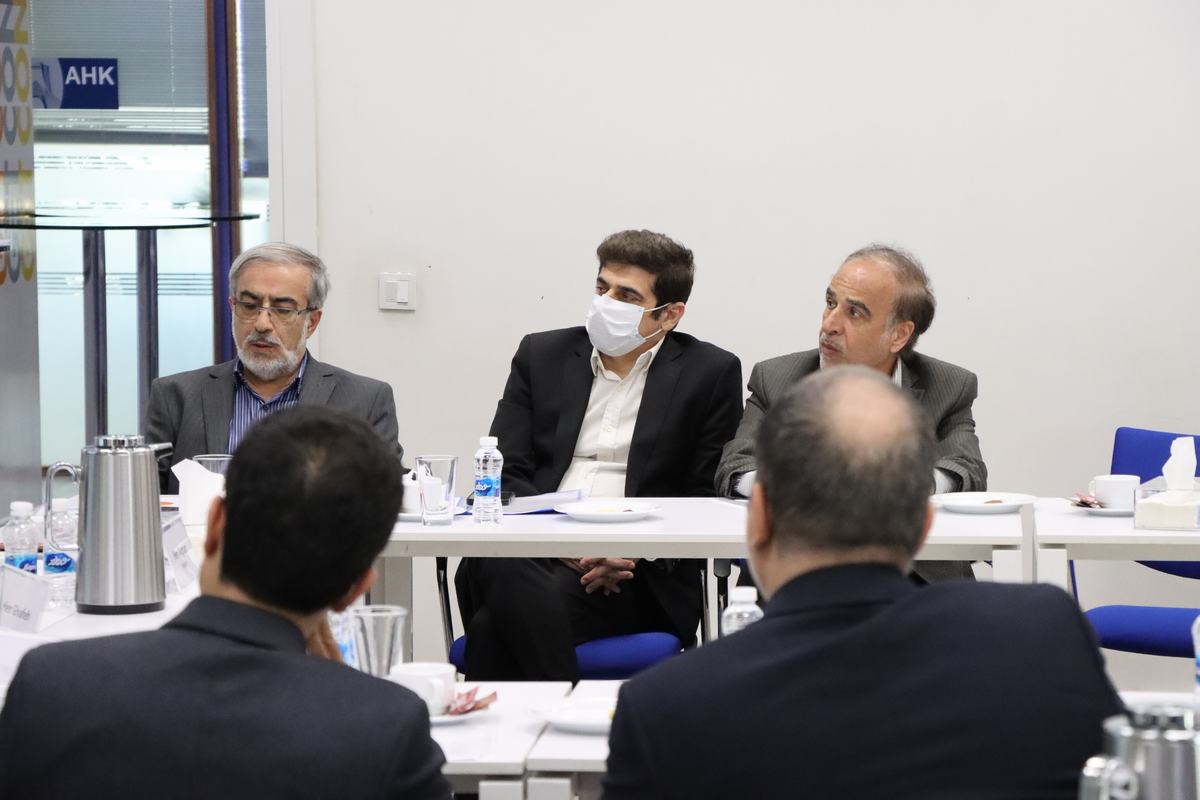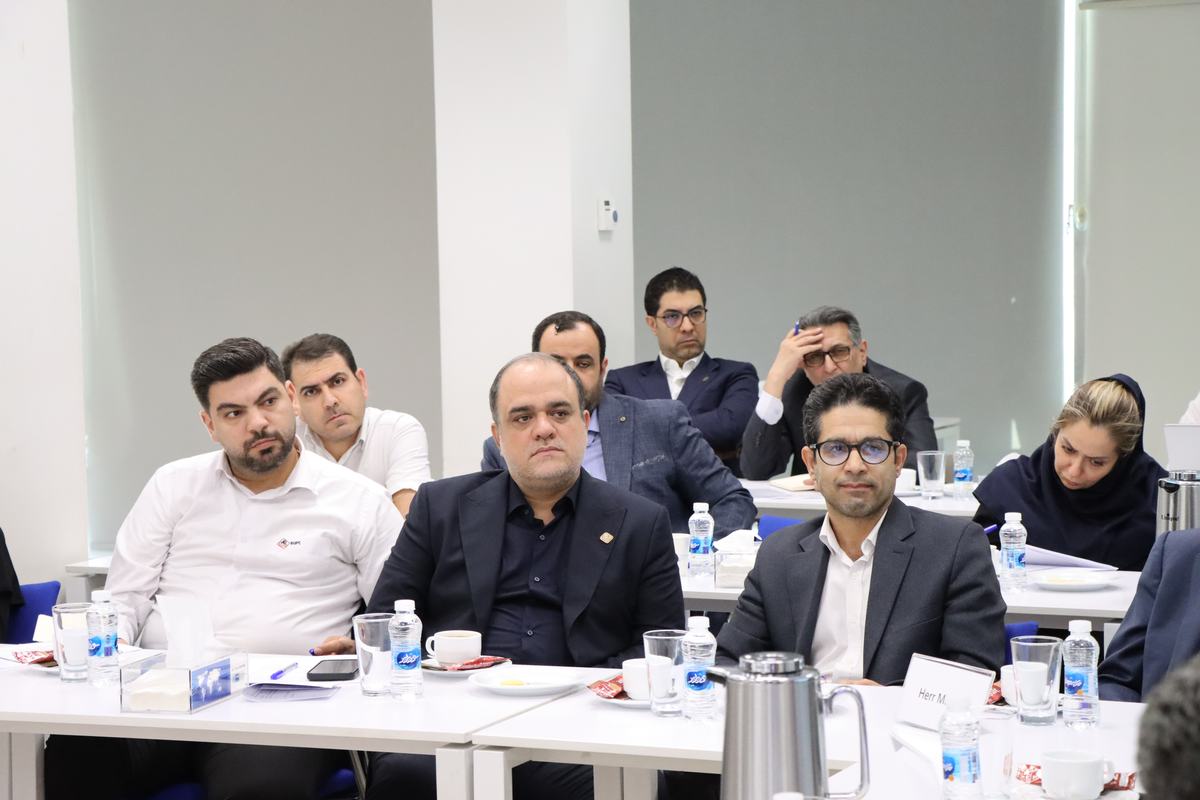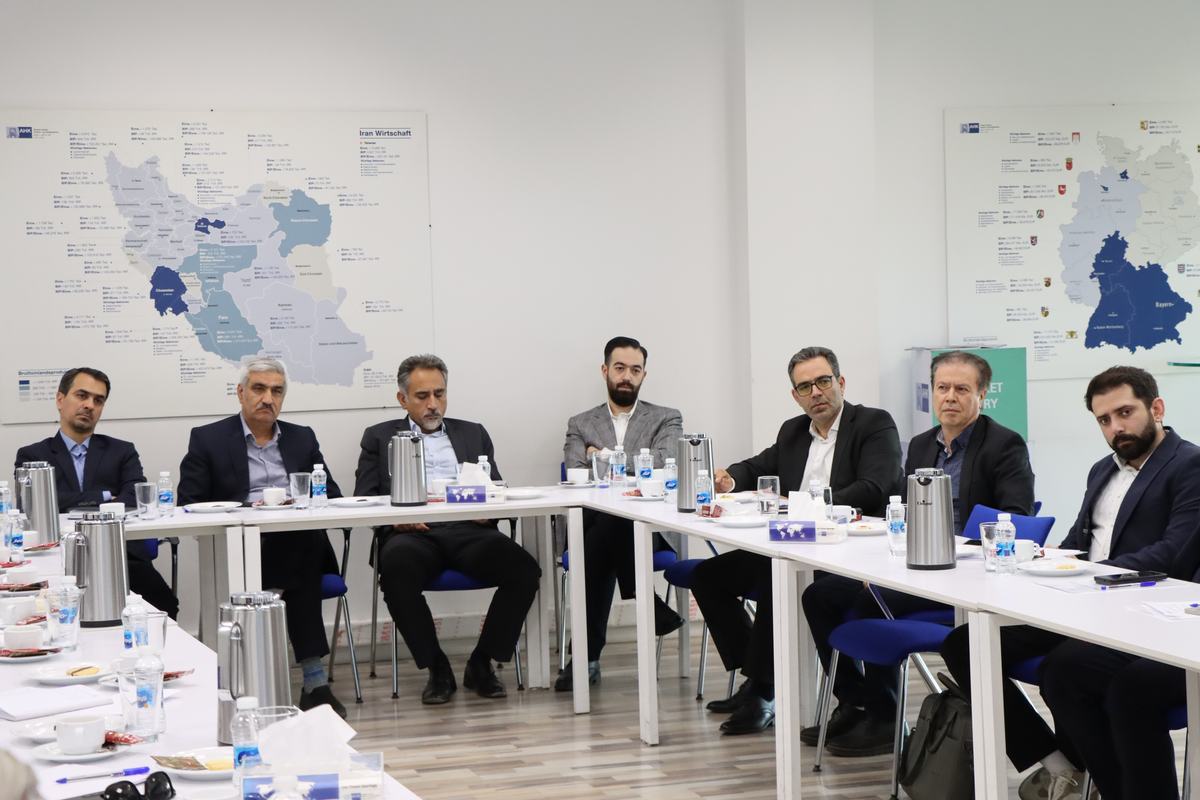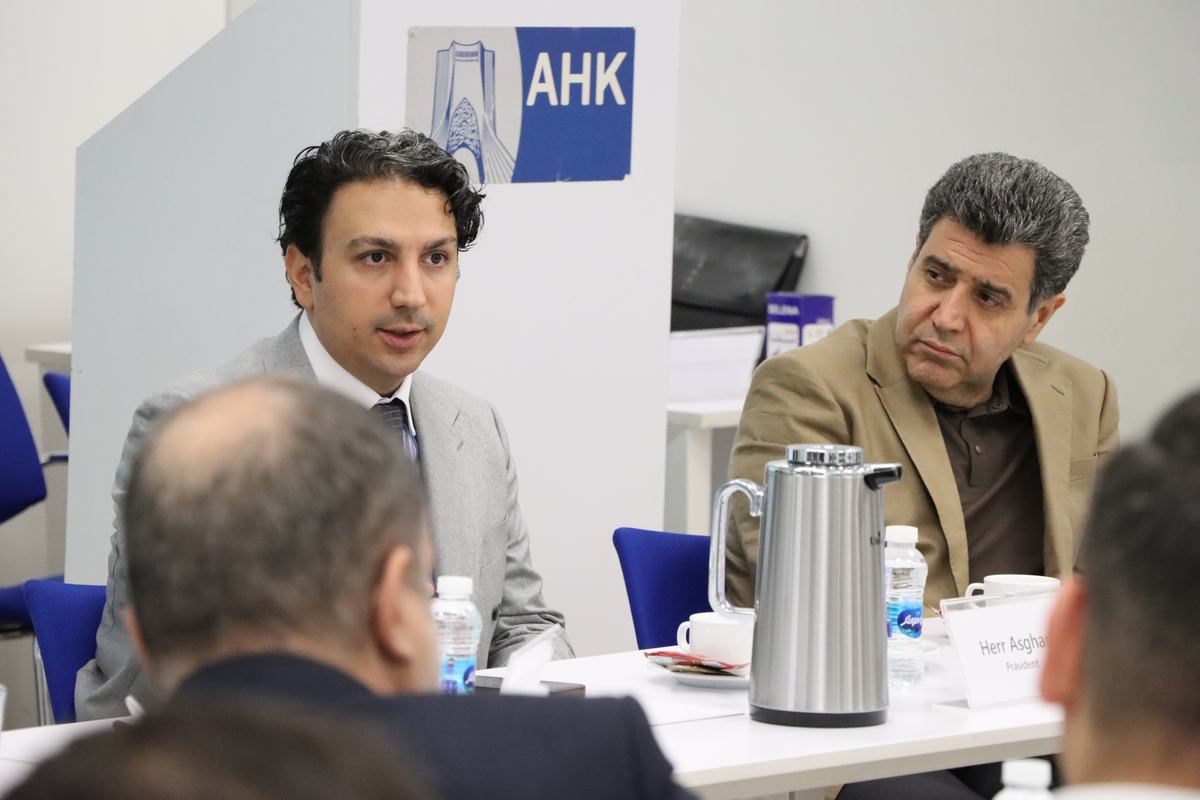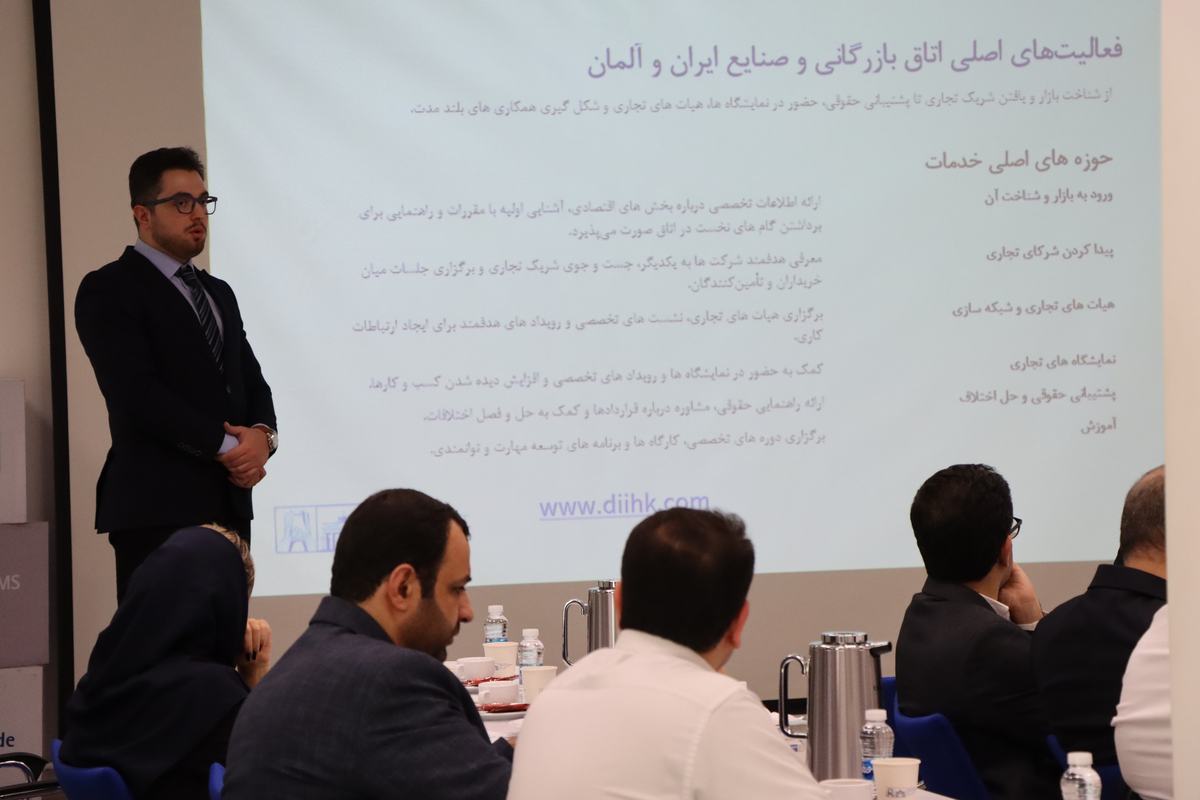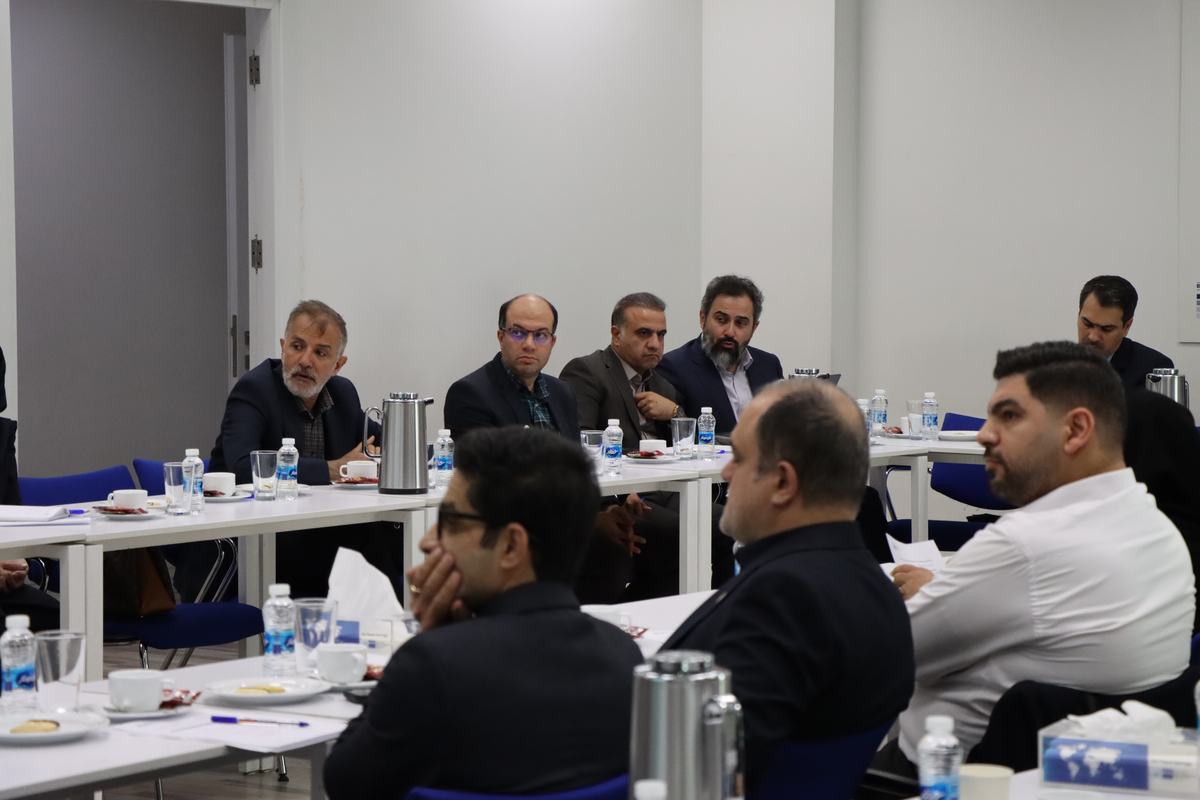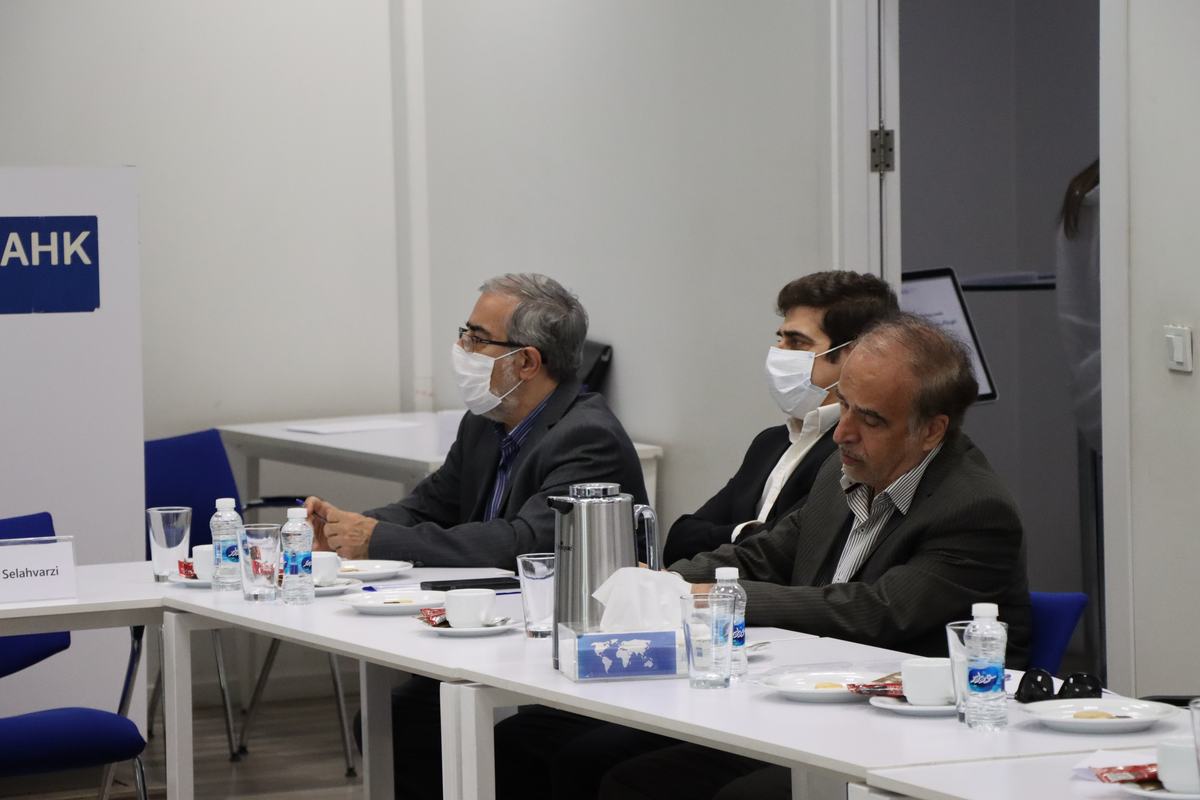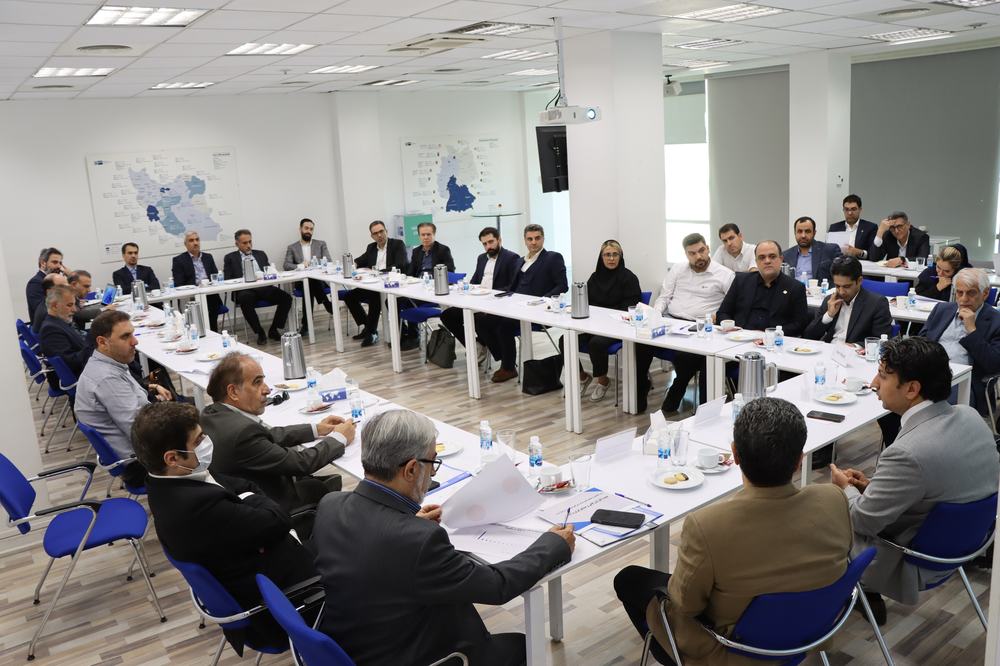
The German-Iranian Chamber of Industry and Commerce continued its series of specialized meetings with representatives of various industries by hosting a group of executives and business leaders from the petrochemical and refining sectors. The meeting focused on examining cooperation opportunities between Iranian and German companies, the challenges facing these industries, and ways to expand trade and technical cooperation. The meeting was attended by Shahin Asghari, President of the German-Iranian Chamber of Industry and Commerce; Ghadir Ghiyaffe, Vice President of the Iran Chamber of Commerce; Hossein Selahvarzi, Chairman of the Board of the Petrochemical Commercial Company and former President of the Iran Chamber of Commerce; Kasra Emam-Saffari, Deputy Head of the German-Iranian Chamber of Industry and Commerce; Ali Majedi, Strategic Advisor to the Chamber; and a number of executives and representatives active in the petrochemical and refining sectors.
At the beginning of the meeting, the role and achievements of the Chamber’s specialized Business Forums were highlighted. The potential for cooperation with Germany, one of Iran’s most important economic partners in Europe, was also discussed. In this context, the capacities and trends of the German petrochemical industry were examined, including its focus on basic petrochemical products, polymers and plastics, specialty chemicals, and chemical and pharmaceutical products. In addition, in light of increasing environmental requirements and competition in global markets, the shift of the German industry toward reducing its dependence on certain basic products and developing higher value-added products was highlighted.
The meeting also emphasized the role of the German-Iranian Chamber of Industry and Commerce in identifying the needs and priority projects of Iranian companies and creating pathways for cooperation with German companies. B2B meetings and matchmaking events, specialized workshops, business delegations, and participation in specialized trade fairs were among the instruments identified through which the Chamber can facilitate and develop connections between business communities in the two countries.
Ghadir Ghiyaffe, Vice President of the Iran Chamber of Commerce, emphasized the importance of environmental requirements and reducing carbon emissions, stating: “Sustainable development must receive greater attention in the petrochemical industry. Iran’s participation in international summits and events is not limited to environmental issues and can also provide an opportunity to access new markets and develop trade relations. In this regard, participation in events such as the Antalya Summit can be a step toward presenting Iran’s capabilities and gaining greater access to European markets.” Ghiyaffe also referred to the issue of catalysts and stressed the need to make greater use of the innovation potential and scientific capabilities of domestic experts and companies. He further described the harmonization of business terminology and frameworks among industry stakeholders as one of the requirements for developing international cooperation.
Hossein Selahvarzi, Chairman of the Board of the Petrochemical Commercial Company and former President of the Iran Chamber of Commerce, referred to the Chamber’s services and the country’s current economic conditions and emphasized the need to strengthen trade cooperation in the petrochemical and refining sectors. He stated: “Given the challenges facing these industries, making use of the capacities of the Chamber and strengthening cooperation among business stakeholders can help overcome obstacles and expand trade relations.”
Ali Majedi, Strategic Advisor to the Chamber, referred to the economic conditions in Iran and Europe and stated: “In cooperation with Germany, four factors are of particular importance: currency, technology and innovation, energy and raw materials, and consumer markets. Given Iran’s regional potential, the country can play an important role in developing economic and industrial cooperation with Germany.”
Logistics, the supply and exchange of catalysts, and existing obstacles to imports and exports were among the other topics discussed during the meeting. One of the participants referred to the challenges in this area and expressed hope that cooperation with the Chamber could help facilitate the import of required materials and equipment while also supporting the expansion of Iranian companies’ exports.
Shahin Asghari, President of the Chamber, highlighted the Chamber’s capabilities in the fields of business and legal consulting and stated: “The Chamber can also play an effective role in providing training and specialized services to stakeholders in the petrochemical and refining industries. By establishing connections between Iranian and German companies, it can help create opportunities for the development of trade cooperation.” Asghari also referred to the need to make the Chamber’s Arbitration Board more active and to increase awareness of its services, stating: “The Chamber’s Legal and Business Advisory Center is a reliable resource for providing specialized services to members and business stakeholders and can be utilized to address and resolve legal and commercial issues and challenges.”
Regarding challenges related to catalysts and European market requirements, including BAFA and REACH regulations, Asghari stated: “Given its contacts and correspondence with German counterparts, the Chamber can play a role in following up on these issues and addressing some of the existing obstacles, thereby facilitating communication and cooperation between Iranian and German companies.”
Currency and banking challenges were also raised during another part of the meeting as major obstacles to trade cooperation. Referring to the cooperation between the German-Iranian Chamber of Industry and Commerce and the Iran Chamber of Commerce, Asghari announced efforts to organize specialized meetings on currency and banking issues and to examine possible solutions.
At the conclusion of the meeting, Asghari emphasized the importance of continuing specialized meetings with representatives of various industries. He stated that the Chamber is seeking to hold these meetings on a regular basis in order to gain a more precise understanding of the needs and challenges of the private sector, provide more effective support and services, and turn discussions into practical cooperation between Iranian and German companies.
It is worth noting that the meeting was attended by executives and representatives of companies including Bandar Imam Petrochemical Company, Ilam Petrochemical Company, National Petrochemical Company, Bushehr Petrochemical Company, Kaveh Methanol Company, Takhte Jamshid Petrochemical Company, Khorasan Petrochemical Company, Hegmataneh Petrochemical Company, Morvarid Petrochemical Company, Arvand Petrochemical Company, Tabriz Oil Refining Company, Abadan Oil Refining Company, as well as a number of other leading companies active in the petrochemical and refining sectors.